







Captaincy is one of the biggest parts of Fantasy FIFA World Cup 2026, and getting it right can make a huge difference to your rank.
In this guide, we’ll recap exactly what captaincy is, how the system works, and most importantly, when you should change your captain during a matchday to maximise points.
HOW DOES THE CAPTAINCY WORK IN FANTASY FIFA WORLD CUP 2026?
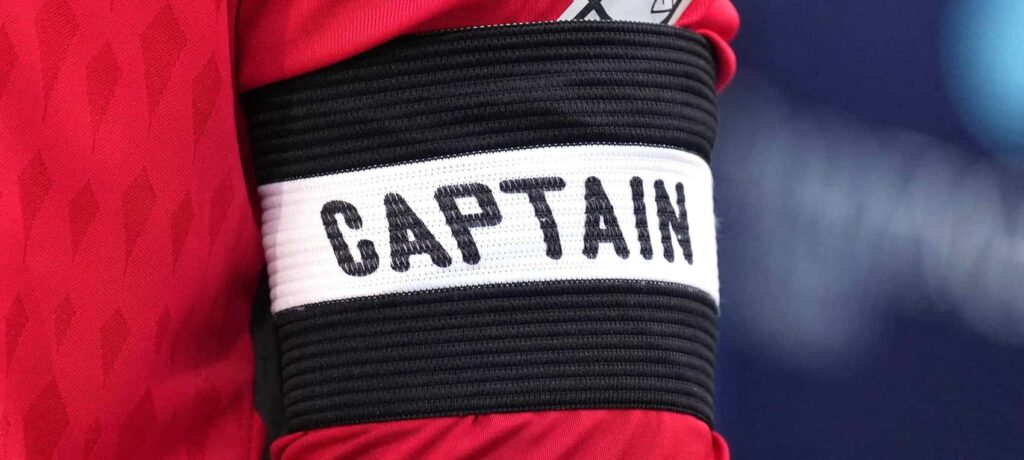
Before each Round (aka Gameweek/Matchday), managers must select both a captain and vice-captain before the deadline. Your captain scores double points, whilst your vice-captain only steps in if the captain fails to play any minutes.
One of the biggest features in Fantasy FIFA World Cup 2026 is the ability to change captains during a live Round.
Managers can switch captaincy an unlimited number of times, as long as the new captain has not played yet and the previous captain has already completed their match.
However, once you move the armband away from a player, you immediately lose their doubled points. Your new captain then becomes the player whose score is doubled instead.
Managers should also note that making manual changes during a live round, including substitutions or captaincy switches, disables automatic substitutions for the remainder of the matchday.
HOW DO YOU CHANGE CAPTAIN?

So, we now know how captaincy works. We know that once you move the armband away from a player, you lose their doubled points, and we also know we can switch captains as many times as we want, as long as the new captain has not played yet. But how do we actually change captain?
Using the team image above as an example, if we aren’t happy with our current captaincy return (more on that shortly), then we can make a switch. If Nico Elvedi ($4.3m) -pictured in the above team – failed to deliver the points we wanted, it would make sense to move the armband on to a player playing later in the schedule.
For example, we could take the captaincy off Elvedi and hand it to Joshua Kimmich ($5.5m), whose match takes place afterwards.
To do this, simply click on the player you want to captain and select the CAPTAIN option, as shown below.

WHEN TO CHANGE CAPTAIN?
Knowing when to change captain is one of the toughest decisions in Fantasy Football.
Captaincy switches can be one of the best ways to gain ground in mini-leagues. It can also improve your global rank. Moving the armband from a player who blanked to someone yet to play can completely change a Round.
However, managers also need to be careful. Although switching captains offers huge upside, it can just as easily backfire. Getting too greedy can have a negative effect. Moving away from a player who already delivered a strong score means risking those valuable doubled points in the hope your new captain does even better.

The example above is a good way to understand when to switch captains. Mexico’s Johan Vásquez ($4.7m) kept a clean sheet and picked up Scouting Bonus points on Thursday. Nine points is a solid return.
However, several factors should influence whether we stick or twist.
The first thing to consider is timing. This score arrived on day one of Round 1, and another 22 matches and 44 teams still remain. That leaves plenty of opportunities for another player to explode with a huge double-digit haul.
Many Fantasy managers will remember Anthony Gordon producing a massive 54-point captaincy haul in UCL Fantasy. Imagine settling for a nine-pointer and missing out on a score like that!
However, the decision is not just about how many matches remain. We also need to consider the quality of the remaining captaincy options.

When judging the quality of a captaincy opportunity, we need to assess the upside of the players still left to play. Key factors include role in the team, penalty and set-piece duties, current form, and fixture difficulty. All of these can heavily influence captaincy potential.
Using the schedule above as an example, several standout options still remain. These include Scott McTominay ($6.5m) against Haiti, Germany attackers versus Curaçao, Mikel Oyarzabal ($8.1m) against Cabo Verde, France attackers facing Senegal, Erling Haaland ($10.5m) against Iraq, and Lionel Messi ($10.0m) versus Algeria. Portugal attackers against DR Congo and Colombia assets against Uzbekistan also offer huge upside on the final day.
There are still plenty of high-quality captaincy opportunities available. That is important. Because of this, switching captain in this situation would look like a smart move.
Of course, these decisions become much tougher as the round progresses. Fewer fixtures remain. The quality of the opportunities also drops, and the risk attached to switching captains increases. The margin for error becomes much smaller, too.
There is no definitive right or wrong answer either. Some Fantasy managers are happy to take bigger risks, whilst others prefer a far more conservative approach. Generally, many experienced Fantasy managers target around 10-12 points from their captain (aka 20-24 after the score is doubled). That is usually considered a strong return and a very respectable score.
That number can still vary depending on how early we are in the round and how many quality captaincy options remain. Picking up 10-12 points early in the week may still tempt managers into switching if several elite, high-upside assets are yet to play. The upside can still be huge, especially in favourable fixtures.
However, if your captain delivers 10-12 points during the latter stages of the round and only limited options remain, then sticking with that score may be the smarter move.


