


Fantasy Premier League (FPL) managers will have two Bench Boost chips to play in the 2025/26 season, with one for each half.
The first one must be used before the Gameweek 19 deadline passes on Tuesday 30 December.
Amid heightened talk of a Gameweek 1 deployment in the comments section, this article will examine the pros and cons of this strategy.

Gameweek 1 Bench Boost: The pros

- Firstly, it gets this chip out of the way, as it can be a headache to plan for mid-season. By using it in Gameweek 1, you can immediately start moving money from your bench to your starting XI, either through free transfers or a Wildcard. If you Wildcard early, you can opt to go cheap with your second ‘keeper, fifth defender and eighth attacker. For those who Wildcard directly into a Bench Boost later in the season, it’s a bit more complicated to sort your squad structure out, as you could have to focus on removing budget fringe players, perhaps to the detriment of your starting XI.
- It’s a unique opportunity, as this is the only time you can effectively play a Wildcard and Bench Boost in the same Gameweek.
- FPL managers have traditionally favoured using the Bench Boost chip in a Double Gameweek, but it seems unlikely we will get a ‘double’ in the first half of the season, unless there is a postponement for bad weather or other unforeseen circumstances.
- We should have a decent (ish!) idea of who will start in Gameweek 1 based on the final pre-season friendlies. This is what happened in 2024/25:
| Team | Starting XI changes from last pre-season match to Gameweek 1 in 2024/25 |
|---|---|
| Arsenal | 0 |
| Aston Villa | 3 |
| Bournemouth | 5 |
| Brentford | 0 |
| Brighton and Hove Albion | 1 |
| Chelsea | 4 |
| Crystal Palace | 1 |
| Everton | 2 |
| Fulham | 0 |
| Ipswich Town | 5 |
| Leicester City | 3 |
| Liverpool | 1 |
| Manchester City | 3 |
| Manchester United | 1 |
| Newcastle United | With fixtures on Saturday 9 and Sunday 10 August, Eddie Howe split his squad in half for Newcastle’s final pre-season friendlies and there wasn’t a complete ‘first XI’ and ‘reserve XI’ distinction |
| Nottingham Forest | 3 |
| Southampton | 0 |
| Tottenham Hotspur | 5 |
| West Ham United | 0 |
| Wolverhampton Wanderers | 1 |
- A Gameweek 1 Bench Boost could help you get off to a good start, propelling you up the early rankings.
- Finally, if further potential budget gems emerge, such as Martin Dubravka (£4.0m) to Burnley, then an early Bench Boost starts to appeal even more. In this scenario, you won’t hinder your future transfers by having to focus on changing your second ‘keeper.
Gameweek 1 Bench Boost: The cons
- A Bench Boost in Gameweek 1 certainly has its merits, but perhaps it might make more sense to save it for a later date when you possess more info and a higher budget. After all, FPL managers get five free transfers in Gameweek 16 to help deal with the exodus ahead of the Africa Cup of Nations (AFCON). You could use this opportunity to activate your Wildcard in Gameweek 13 to capitalise on the favourable fixture swings for Newcastle United, Manchester City and Liverpool. Subsequently, you could Bench Boost in Gameweek 15 with, for example, budget players from Brighton and Hove Albion, and then tidy up your bench using the five free transfers provided in Gameweek 16. That said, it is important to note that there is a midweek round of matches in Gameweek 14, which could lead to increased rotation when you Bench Boost. The after-effects could be more positive, however, as having a deeper squad in this period may prove beneficial, allowing you to absorb some of the inevitable winter rotation that will take place.
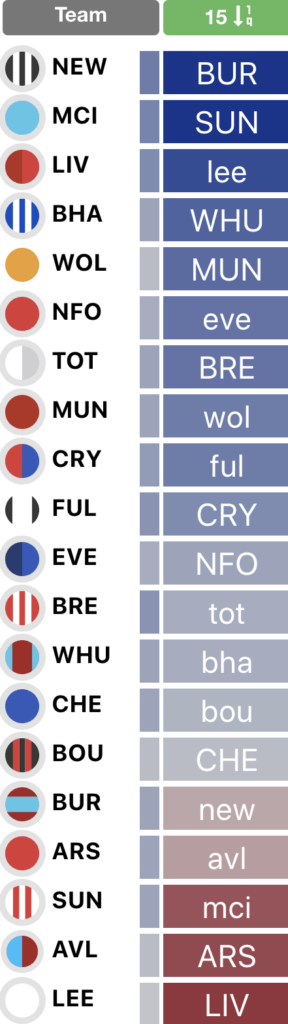
Above: The Gameweek 15 fixtures sorted by difficulty on our Season Ticker
- Linked to the above point, we’ll also have much more clarity on which budget picks are the best further down the line.
- Bench Boosting in Gameweek 1 is likely to impact the balance of your squad, potentially forcing you into an early Wildcard, particularly if a £4.0m ‘keeper fails to emerge. For those who want to save the Wildcard chip for later, it could prove problematic, as you may find yourself needing to spend early free transfers shifting funds from your bench, instead of getting on any early-season bandwagons.
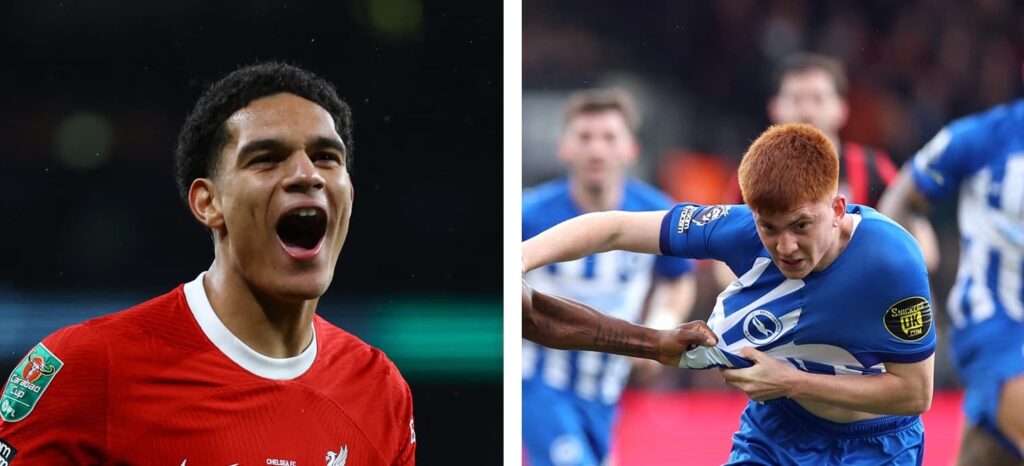
- Despite having a decent idea of who will start (see above), it is also true that Gameweek 1 is arguably the most challenging to predict, both in terms of which players will actually play and the dynamics/tactics within a team. And something unexpected usually happens, like Valentin Barco being benched in 2024/25 and Gabriel Magalhaes (£6.0m) the season before. Jarrell Quansah exited at half-time in the previous campaign, too.
Gameweek 1 Bench Boost draft

If you plan to Bench Boost in Gameweek 1, it is advisable to select secure starters who have featured in pre-season, or at the very least in the FIFA Club World Cup, as is the case with Chelsea.
This draft, which has £0.5m in the bank for upgrades, is generally a safe play in that regard.
Defensive contribution points could be earned by Virgil van Dijk (£6.0m) and Murillo (£5.5m), plus Elliot Anderson (£5.5m) and Carlos Baleba (£5.0m), who will be back in training this week ahead of the Southampton friendly.
Further forward, Ollie Watkins (£9.0m) and Chris Wood (£7.5m) have favourable fixture runs over an extended period, with Aston Villa and Nottingham Forest both ranked among the top four teams for fixture difficulty in Gameweeks 1 to 7.
- READ MORE: FPL 2025/26 first draft team reveals: Triple Forest + Everton
- READ MORE: FPL 2025/26 first draft team reveals: DC magnets + Bench Boost


