







As we count down to the Fantasy Premier League (FPL) Gameweek 1 deadline, we’re welcoming back our team of guest contributors for 2026/27.
This time, we hear from FPL Milanista, who has five top 25k finishes in the last seven seasons.

There is a strange moment that happens to every Fantasy Premier League (FPL) manager before the season begins. You have spent hours building your squad, you like your midfield, you trust your strikers, and you have found a defender who looks like excellent value.
Then you check the ownership numbers and suddenly everything changes as the doubt creeps in. What if everyone else knows something I don’t? This question may be one of the biggest psychological traps in FPL.
HIGH OWNERSHIP ≠ GOOD PICK
Ownership is undoubtedly useful. It tells us how the wider FPL community is behaving, highlights popular players and helps managers understand the potential consequences of going against the crowd.
But there is a growing danger that FPL managers are treating ownership as a measure of how good a player is, rather than simply a measure of how popular a player is. And those are two very different things.
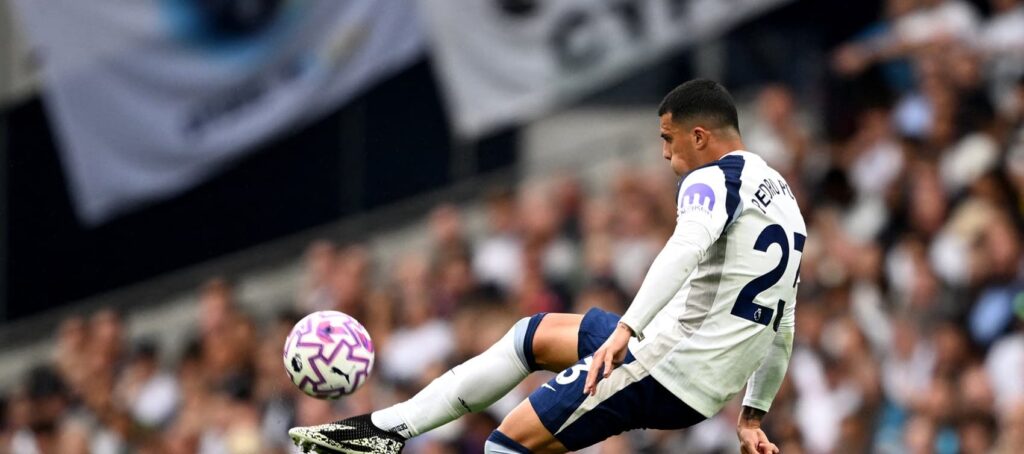
Pedro Porro (£5.5m), for instance, is the third-most-popular defender in the game, despite not kicking a ball in pre-season. While auto-picks may be skewing that figure, a FPL manager logging in and seeing that inflated ownership percentage may be unwittingly influenced.
THE FEAR OF MISSING OUT
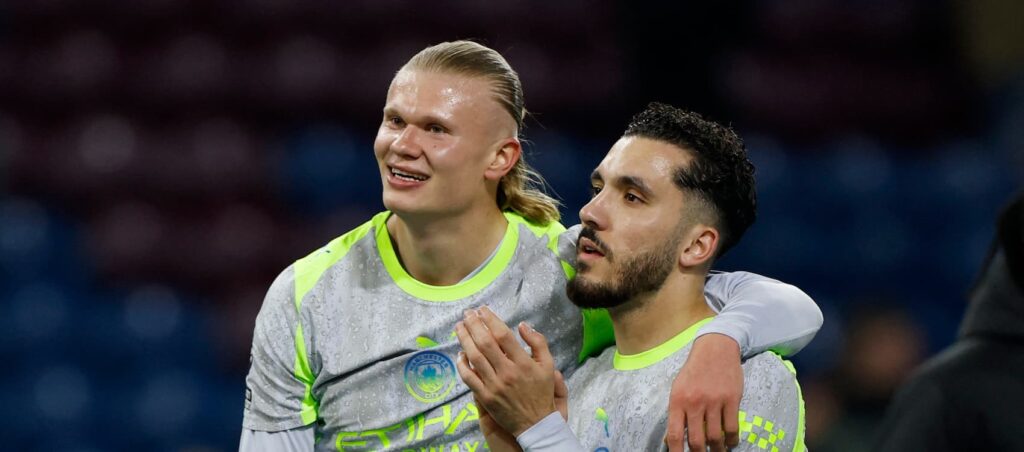
Let’s take an example here. Erling Haaland (£15.5m) is currently around 72% owned. That level of ownership is understandable as he is one of the game’s most explosive scorers and his price of £15.5m makes him the biggest premium decision facing managers.
But imagine a manager decides that Haaland is not the best use of £15.5m? Perhaps they prefer a spread of money across three or four players, or they believe Manchester City’s fixtures are less attractive than another team’s. That manager might still feel uncomfortable leaving Haaland out, and that is not necessarily because evidence has changed, but because everybody else owns him.
If Haaland scores twice while your alternative blanks, you don’t merely lose points. You lose points against millions of managers who already have him. That is what makes ownership such a powerful psychological force as it creates the fear of being different.
TREAT OWNERSHIP MORE AS A MEASUREMENT OF RISK

This doesn’t mean you have to completely ignore ownership. Ownership can be one of the most useful numbers available to an FPL manager if it is used for the right purpose. Think of it as a measurement of risk rather than quality. If a player is owned by 70% of managers, owning him means you are broadly protected if he performs well. Should he score 15 points, a huge portion of the field benefits alongside you. If you don’t own him, you are making a conscious decision to accept the risk of falling behind. That doesn’t make the decision wrong, but it simply makes the decision high-risk.
The same applies at the other end of the spectrum. A player owned by 3% of managers doesn’t become a good pick simply because owning him would give you a potential advantage. He still has to score points, which may sound obvious, but it is remarkably easy to forget when scrolling through FPL ownership lists. A 3% owned player is not automatically a differential, as he might just be a bad player.
THE ‘OWNERSHIP BEFORE ANALYSIS’ MISTAKE
The problem becomes even greater when ownership starts influencing decisions before the manager has properly analysed the player.
Imagine your initial draft contains Player A. You like the fixtures, expect him to start, and his price fits your structure. Then you discover that Player B has twice the ownership, which makes you feel that he is a safer pick, and make the switch. Then another draft appears with Player C, an even more popular choice, so you switch again.
Eventually, your squad isn’t really your squad anymore. It is now a collection of the players you believe you are supposed to own. This is where FPL can become less about prediction and more about consensus.
PRE-SEASON RED HERRINGS
Pre-season games are another factor playing into ownership figures. A player scores in a friendly, looks sharp in another game and suddenly his ownership starts climbing. Before long, managers who had never considered him are asking whether he is a “must-have”.
But pre-season form can be misleading. Friendlies are supposed to give us useful clues about a player’s fitness, position, minutes, tactics and set-piece responsibilities, but scoring goals against lower-level opposition doesn’t guarantee points once the real competition begins.
CONFIRMATION BIAS

Ownership can also become a feedback loop. A player becomes popular, managers see that popularity as confirmation that he is a good pick, more managers buy him and his ownership rises again. Eventually, the ownership itself becomes part of the argument for owning him.
FINAL THOUGHTS
All of that doesn’t mean managers should ignore ownership. If a player is owned by 70% of the game, leaving him out carries significant risk if he performs. But that is different from saying he is automatically the best pick. The objective isn’t to build a unique team. It’s – and it sounds so simple – to build the team you believe will score the most points.
That means ownership should probably be one of the last things we consider, not the first. Look at the fixtures, minutes, role, price and potential for points. Then look at ownership and decide how much risk you’re comfortable taking.
Ownership will never tell us whether a player will score. It only tells us what happens to our rank if he does. And perhaps that’s the healthier way to approach FPL. Don’t avoid popular players just to be different, and don’t pick them simply because everyone else does.
Make your decision first and then look into ownership.
Good luck, everyone!


